Built on what was there.
Same logo, same product names, same approvals. Nothing a loyal customer has to relearn.
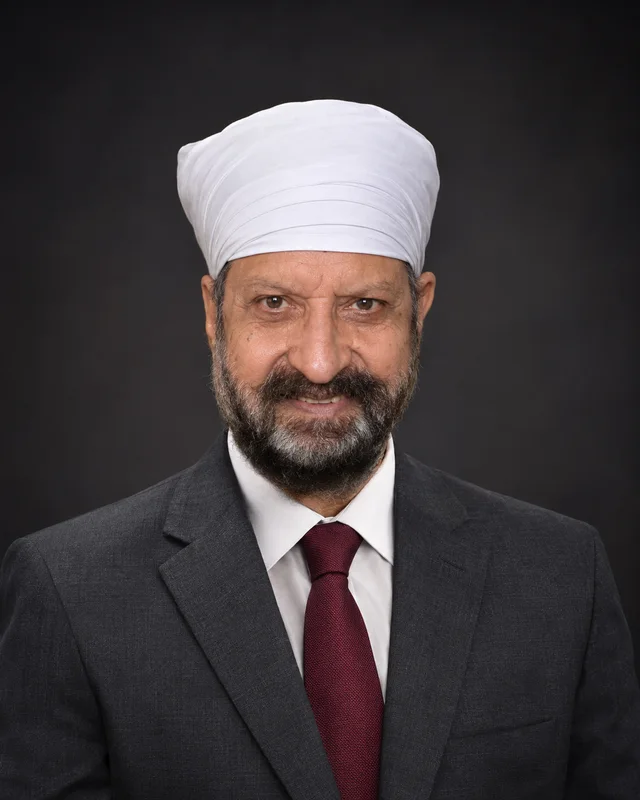
Dr. Bhagwant Singh has built motors in Bangalore since 1985. Around fifty manufacturers rely on them, and every one is tested before it ships. The next buyers search before they call. EGGA made Allied ready for them.
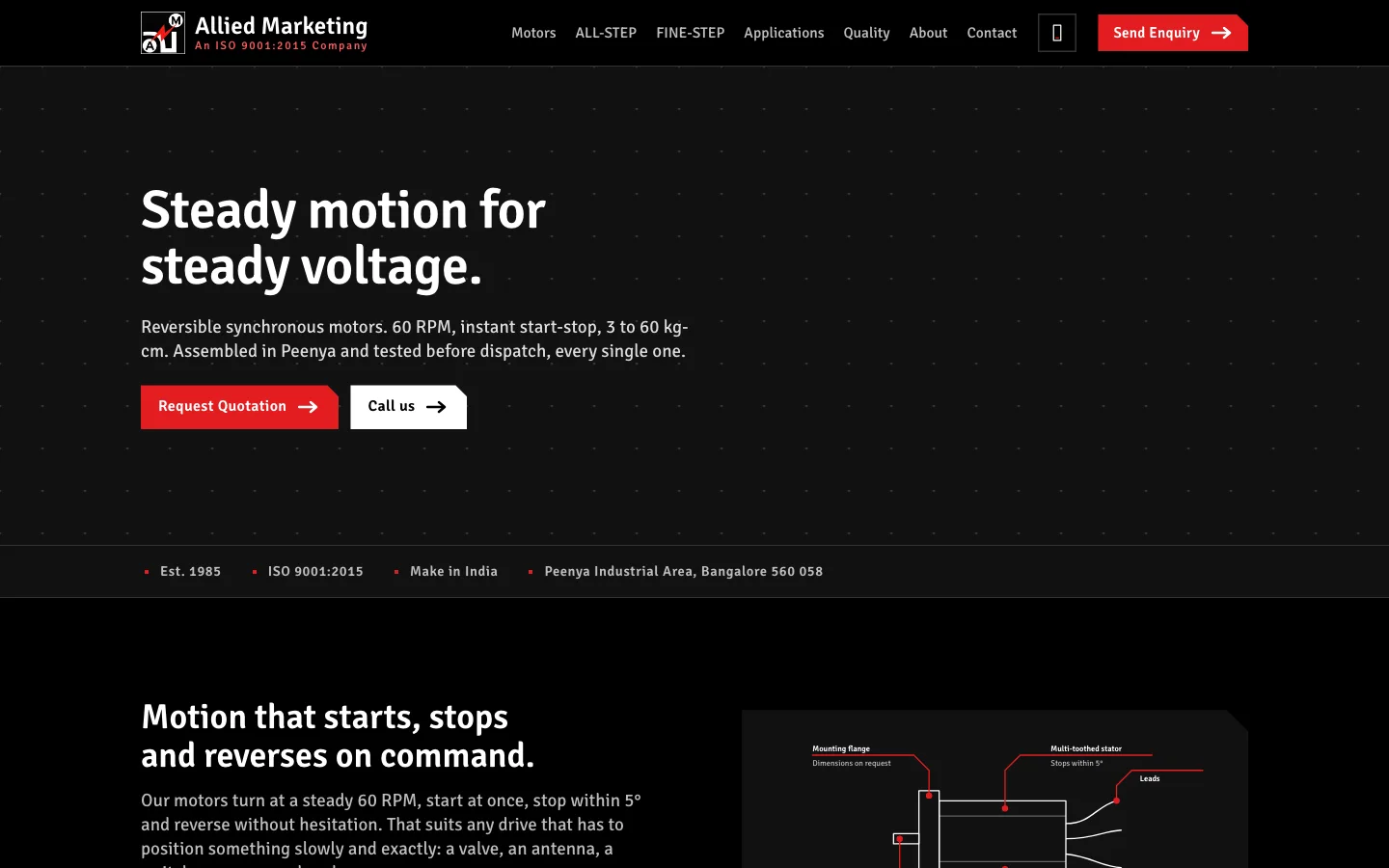
Most rebrands start by throwing the old logo away. This one started by picking it up. Allied's mark is printed on the label of every motor it ships: an A and an M in two circles, joined by a red bolt. The engineers who fit those motors know it on sight. That recognition took decades to earn and costs nothing to keep.
So we redrew it line for line, as a clean square tile that works at every size from a browser tab to a motor label. Then we let the mark design the rest. Its black and white became the palette. Its red became the only colour allowed to shout, kept for the mark itself and for the button a buyer should press next. The sharp angle of the bolt became the cut corner on every panel, label and button.
Then we gave it a bigger job. On the old labels the mark sat quietly in a corner. Today it signs everything Allied makes: both product lines, every datasheet, every page of the website. One mark, one standard. A buyer who finds Allied on a phone will recognise the motor when it lands on the bench.
Allied Marketing makes a motor most people will never see. It sits inside a servo voltage stabilizer, the box that keeps the mains steady for a factory or a home, and it has one job: turn slowly, stop exactly, reverse on the spot. Do that reliably for forty years and manufacturers stop shopping around.
That is how Dr. Bhagwant Singh built the business. No advertising. Around fifty manufacturers buy from Allied, from small assemblers to national and multinational brands, and many have written its motors into their designs. Every motor is tested in the Peenya works before it ships. The company is ISO 9001:2015 certified. Its founder also built High Voltage India, which makes test equipment for engineering colleges and laboratories.
So the question was never what to fix. It was what comes next. The engineers who will specify motors for the next twenty years do their homework on Google and, more and more, by asking an AI assistant. They have not met Dr. Singh. They have not held the motor. What they find online decides whether they ever will.
He wanted a partner who would learn the product properly, work to an international standard and treat his budget the way he does. That was the brief.
An engineer spots vague copy in one line. So we started with the wiring diagram.
Allied's product knowledge lived where it lives in most engineering firms: on the labels, in a leaflet from the 1990s and in the heads of the people who build the motors. We read all of it, asked the awkward questions and wrote the whole range down. Dr. Singh checked every line. Only then did we open a design file.
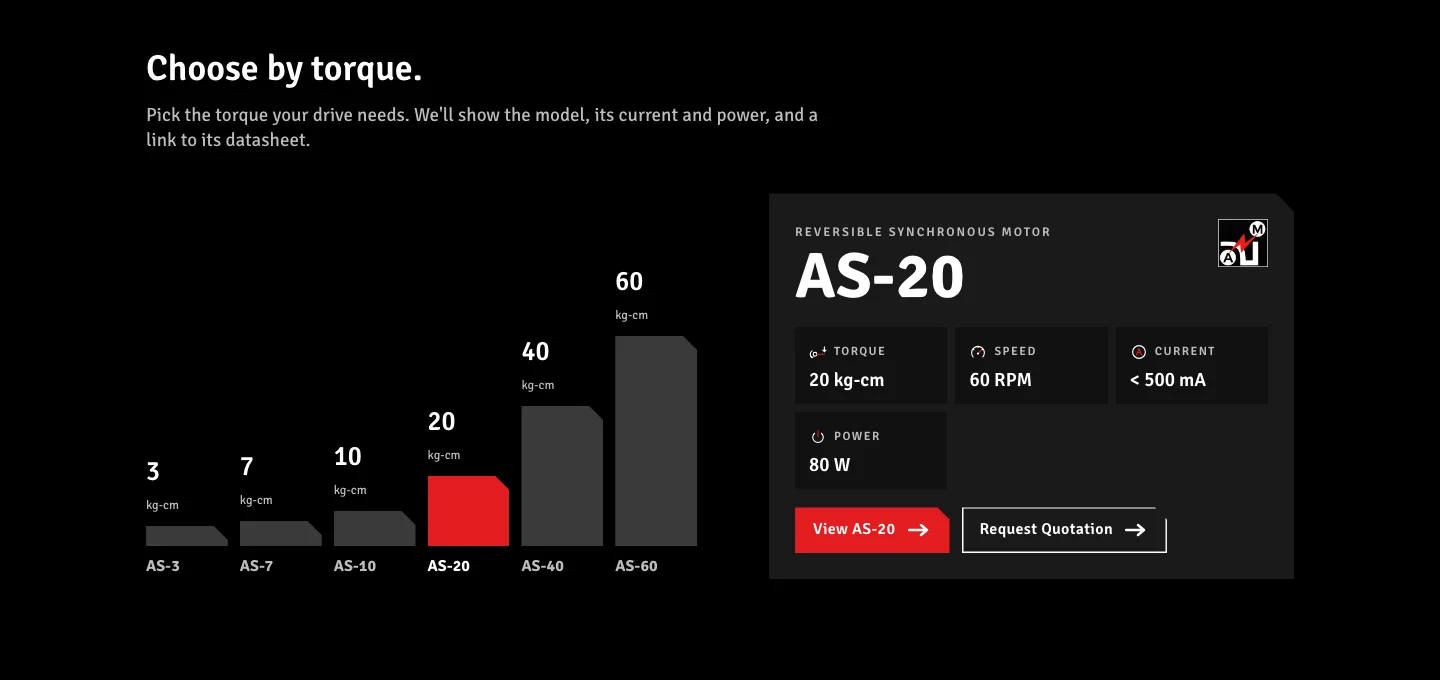
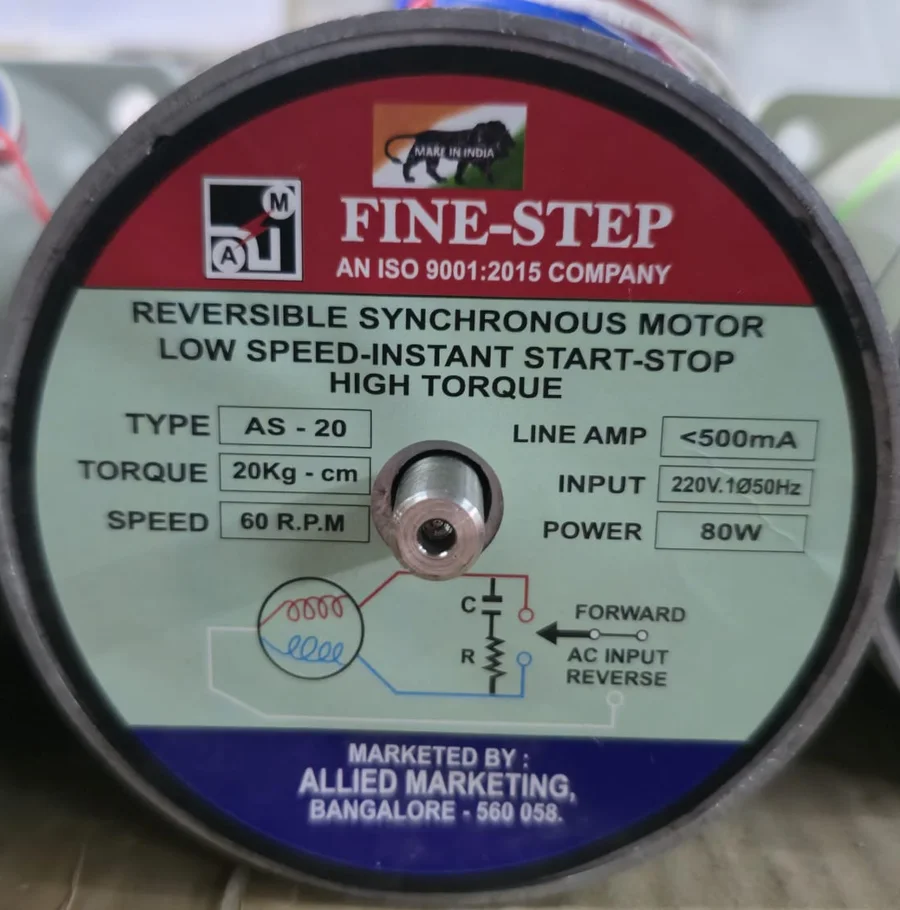
Every model turns at 60 RPM on single-phase 220/230 V. The only thing a buyer chooses is torque, from 3 to 60 kg-cm. So the whole site is organised around that one decision.
A wire-wound stator and a permanent-magnet rotor lock the motor to the mains. It starts at once, stops within 5° and reverses without a pause. That precision is the product.
On a multi-phase stabilizer the motors have to stay in step. Allied's hold within 3.6° of each other. We put that number next to torque, where a buyer looks first.
Two windings, a common lead, a capacitor and a resistor in series, one switch for direction. Allied supplies the matched capacitor and resistor, so the buyer receives one tested set.
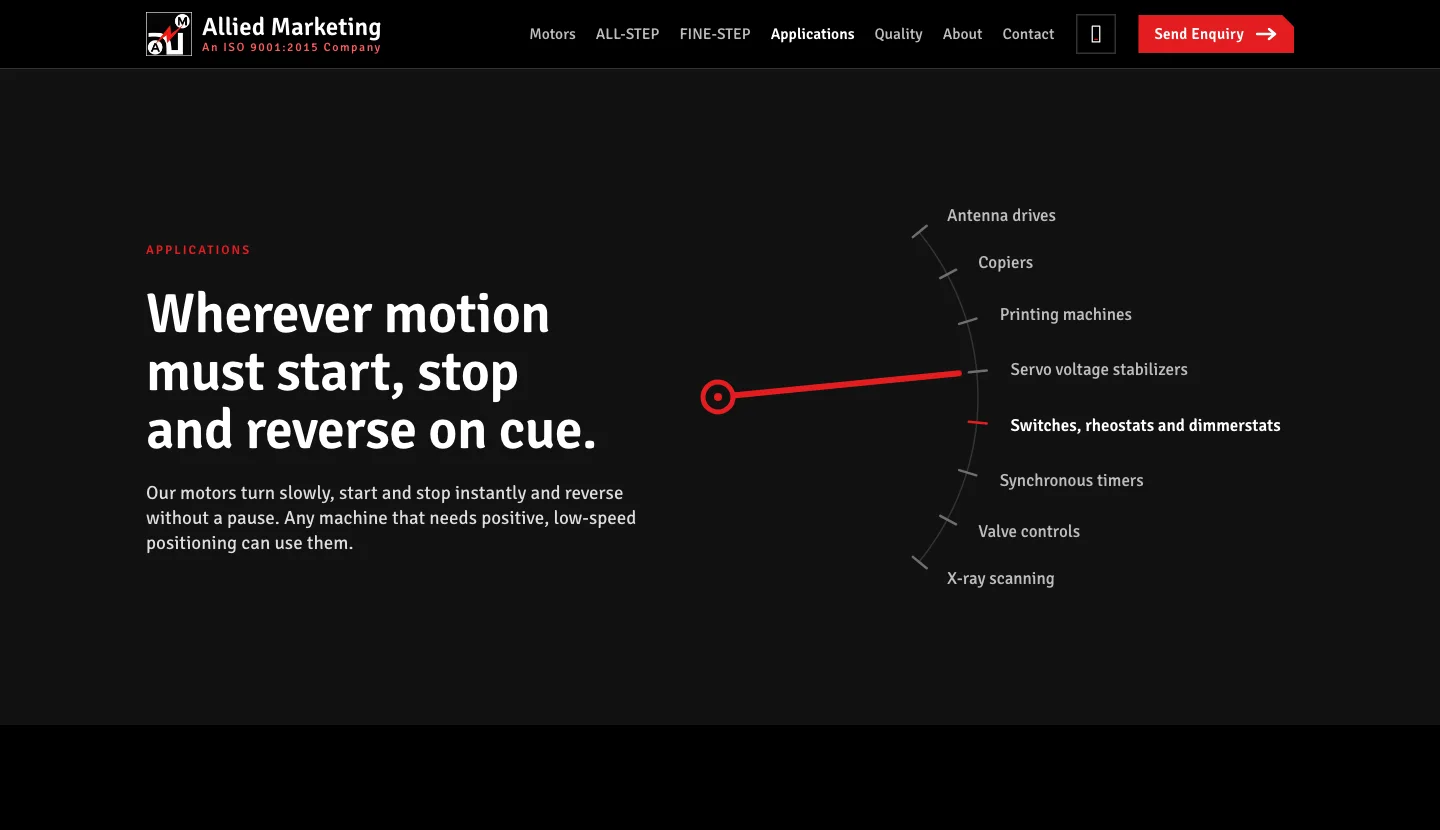
In a stabilizer the motor moves a carbon brush along the variac until the voltage is right. The same slow, exact motion runs antenna drives, valve controls, printing machines, timers and X-ray scanners.
Every motor is tested before dispatch, not one in a batch. And the founder's other company builds the machines that test winding wire. That is a hard claim to copy.
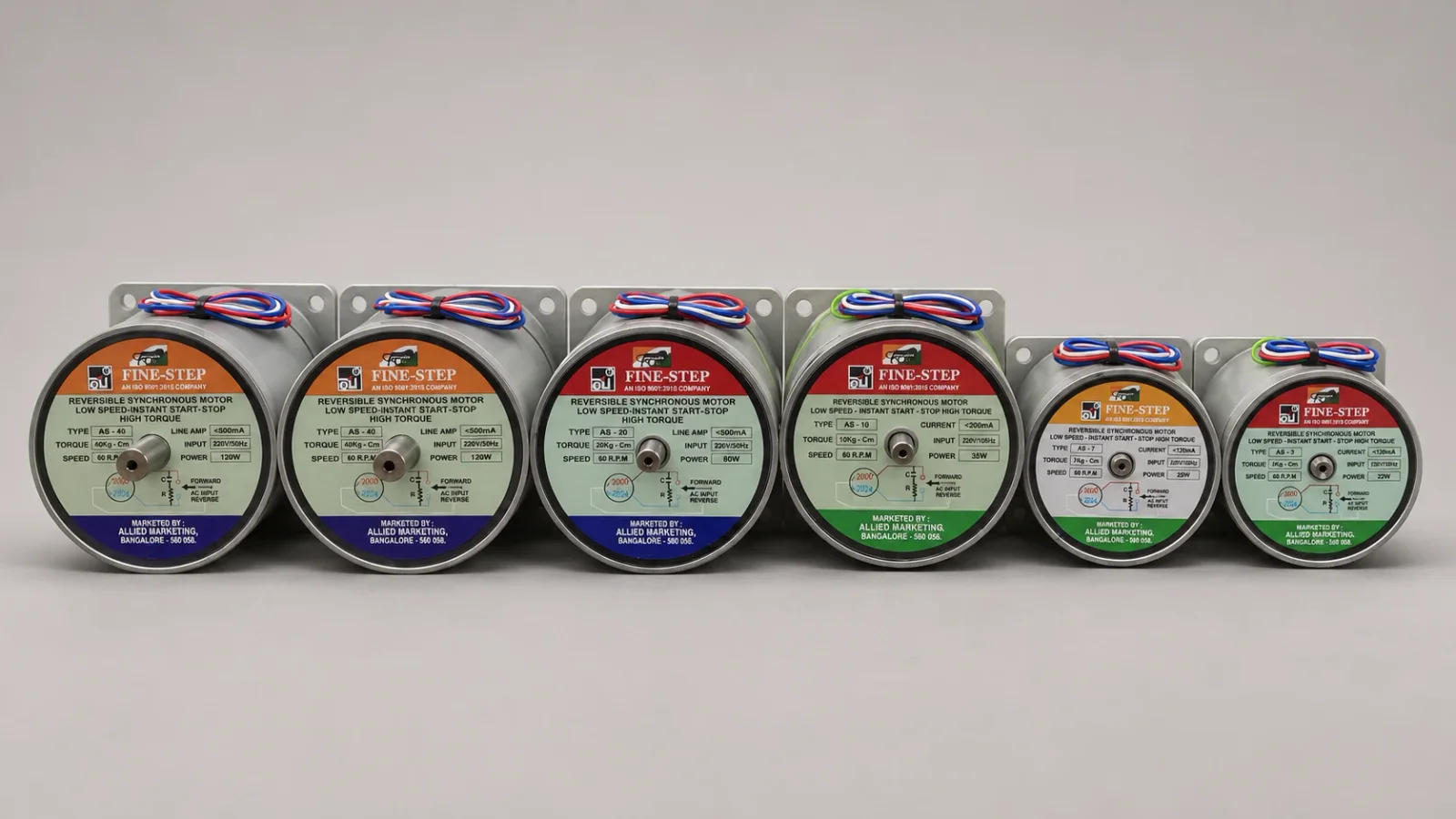
Most of Allied's customers make servo voltage stabilizers. Calling the product a stabilizer motor would have been accurate, and it would have put a ceiling on the business. The motor does not care what machine it is in. It turns slowly, stops exactly and reverses on command, and plenty of machines need that.
So we positioned the motor by what it does. Stabilizers get the deepest explanation on the site, because that is where the proof is. The applications are listed alphabetically, and no industry owns the range.
Then the claim. Allied tests every motor, so we said exactly that, in four words, and put the founder's second company behind it.
Two people decide an industrial purchase. The engineer wants torque, current, wiring and a datasheet, and has no patience for a form. The purchase manager wants to know who makes it, where, and whether somebody answers the phone. allied-marketing.co gives each of them a straight answer, in sixteen pages.
Pick a torque on the range ladder. The site shows the model, its current, its power and its datasheet.
One A4 page per model, the same layout for both product lines, built from the same data as the website. The two cannot disagree.
Request Quotation, Call us and WhatsApp. The full Peenya address and the GST number. An enquiry form for everything else.
One diagram follows the signal from the voltage sensor to the brush on the variac, and shows where the motor earns its keep.
A quality page that says what is tested before dispatch, with ISO 9001:2015 and Make in India beside it.
Every specification is a field in the content system. If a figure is not confirmed, the page leaves it blank. A buyer can trust every number on the site.
Dr. Singh is an engineer, and he read the change in buying like one. If the next customer asks a machine before asking a person, the machine had better have the facts.
AI assistants repeat what they can read and confirm. So each page answers one question in plain words. Every specification says the same thing on the website, on the datasheet and in llms.txt, a short file that introduces the company to AI systems. Google Search Console and a full sitemap take care of search. Ask for a reversible synchronous motor made in India and Allied's facts are there, the same wherever the assistant looks.
My work in high-voltage testing, through High Voltage India, taught me that quality is proved on test, not promised in a brochure.
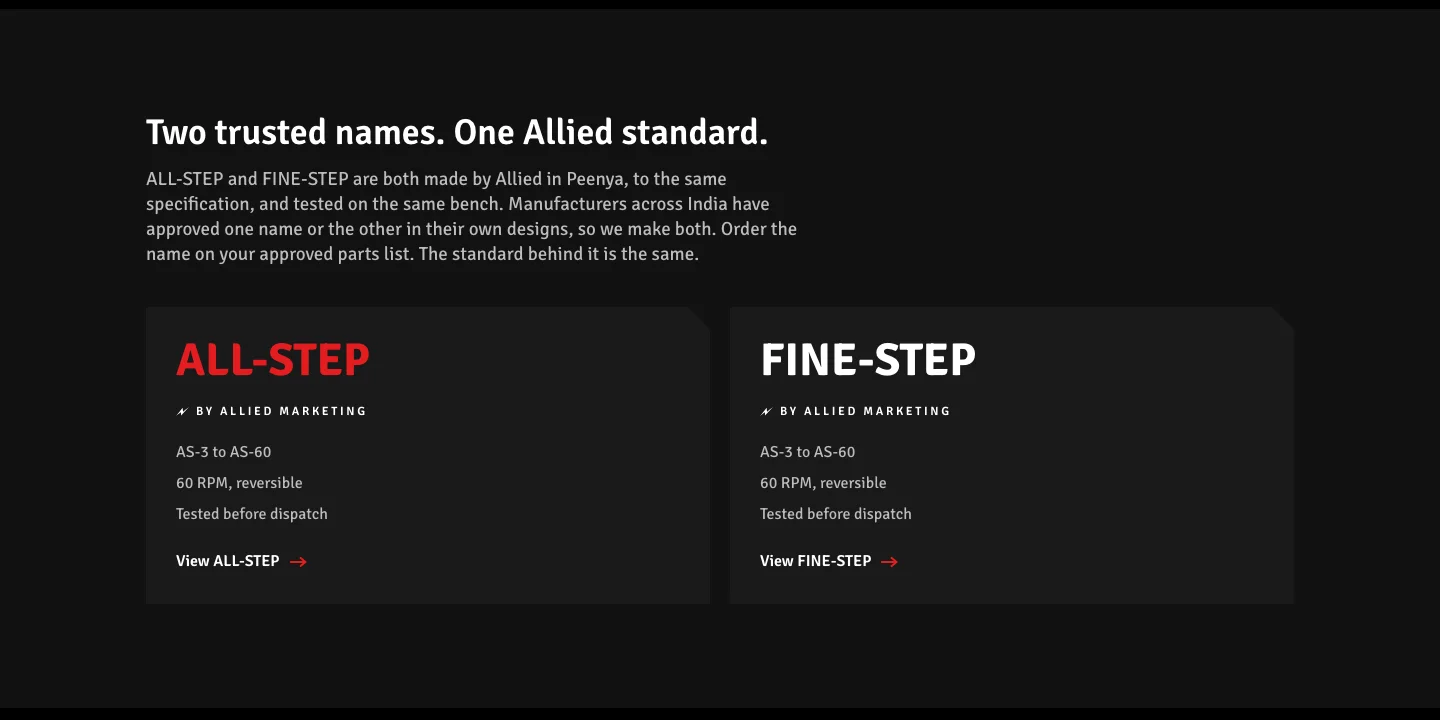
Allied makes its motors under two names, ALL-STEP and FINE-STEP. Over the years each name was written into the approved parts lists of a different set of manufacturers. Drop one, and loyal customers have to re-approve a part that already works. That was never an option.
A new buyer sees two names and wonders. Which one is better? Which one is cheaper? The answer is neither, so the brand now says so at a glance.
The product name leads. "By Allied Marketing" follows, on every label and every datasheet.
Same promise, same proof, same label, same datasheet. Only the colour changes. The two always appear the same size, side by side, in alphabetical order.
The site says it in plain words: order the name on your approved parts list. The standard behind it is the same.
Both lines move to one label template. Model code, ratings, spec boxes and wiring diagram stay where customers expect them, because approvals can depend on those markings.
Allied and High Voltage India share a founder. The site now says so, and each company's record backs the other.
The identity is strict because the product is. Black, white and one red. One typeface, Signika, the one High Voltage India already uses. A 22-pixel dot grid under every layout. Square corners with one cut. Numbers set in tabular figures, so a column of specs lines up the way a table should.
All of it is written down as rules with numbers. Allied can hand the system to any printer, developer or agency and get on-brand work back first time.
A website opens the door. A plan decides who walks through it. We studied Allied's customer list: who buys, what they build, where they are and how they found Allied. The roadmap that came out of it starts close to home, with the machines beyond stabilizers that already use the motor and the manufacturers that look most like Allied's best customers.
The motors did not change. Neither did the test bench, or the founder. What changed is that a buyer who has never heard of Peenya can now find Allied, understand it in minutes and check every claim.
Same logo, same product names, same approvals. Nothing a loyal customer has to relearn.
We learned the motor before we wrote about it, and the founder checked every line.
Found on Google, readable by AI assistants and clear to an engineer in a hurry.
For forty years our motors did the talking. But an engineer looking for a motor today searches first, and we were not there to be found. EGGA learned our product the way an engineer would, kept everything our customers rely on, and made Allied as clear online as it is on the test bench. Nothing is exaggerated. Everything can be checked.
Tell us what you make. In a free briefing call we look at the market, the positioning and the first moves, and you keep the plan either way.
Book a briefing call